on the wrong side of sunrise

Category: Uncategorized (Page 3 of 11)

Sanctuary

awproom
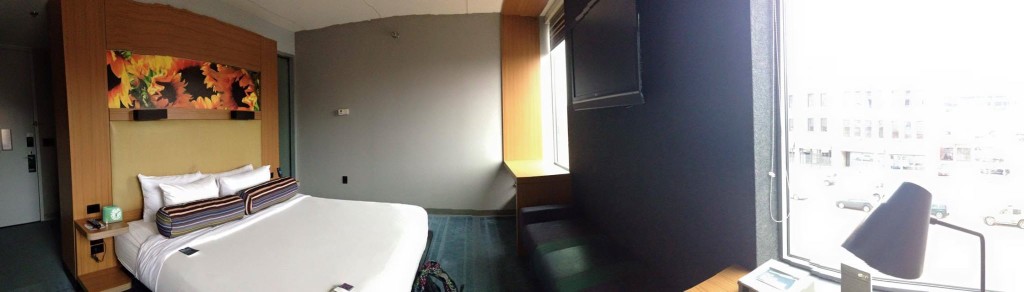
It’s that time of year. AWP 2015 has arrived; I’m writing this now from my third-floor hotel room, looking out over Washington Ave., in Minneapolis.

Emphasis not on Minneapolis, although it’s nice to be out of Indiana for a bit, or AWP, although that’s certainly the reason I’m here, or third-floor, even though it gives a bit of a view. No, emphasis on my.

When I was sixteen, my ever-indulgent parents got me a retreat for Christmas. Nothing extravagant, because I didn’t need extravagance; it was just five days at the Super 8 maybe twenty minutes from our house, but for me, with a brand new draft of a novel sitting in front of me, begging to be torn apart and reworked, it was a perfect writerly sanctuary. I stayed in my room with DO NOT DISTURB on the door, blinds drawn, music playing, and manuscript pages and maps and note cards splayed out all around me.

I drank alcohol-free merlot, ate tortillas with pesto, kept my own hours, and hermitted it up (although I think I reached out by text a few times for advice).

I’m not going to hermit in Minneapolis; I’m going to the conference, and to the book fair, and around the city. Still, I have a room, and it’s mine. Not in a permanent way—just in an exclusive one. My little hotel sanctuary.

This evening I took myself and a book to dinner at a restaurant across the street, Sanctuary. I’d read the menu online, and it looked exciting—and it was, but it was also much classier than I anticipated. (Seriously, look at the website. I feel like it was not an unreasonable assumption on my part.) I walked in and was seated by the very well-dressed host … and then looked around and realized that it wasn’t just the host—everyone was very well-dressed.

My first impulse was to apologize profusely—my jeans and Payless shoes and shirt with hops on it had tripped and fallen in here by accident, and I would get out of the way right now. Instead, though, I stayed; I lingered for two hours, over …

garlic, spinach, and parmesan artichoke tartlets, provincal olives, cornichons and a shot of white verjus

liquor 43 bread pudding with salted caramel ice cream and ristretto espresso crème anglaise

a quasi mojo—and absinthe mojito

and a cup of coffee

Not surprisingly, especially to anyone who looked at the menu, it was an expensive linger. Still, it was mine, whether or not I fit in.

Plus, part way through my meal, more conference types started to come in, and writers are a notoriously shabby lot. Suddenly I was not so out of place after all.

Sanctuary takes different forms, see?

Introver$ion

You guys, I have a confession to make:

Sometimes I listen to Ke$ha. For instance, “Blow”:

Sometimes—not often, but sometimes—I even go to dance clubs. Willingly, I should add—not just because my friends have coerced me. Near where I grew up is a club named Necto, which has a different theme for each day of the week. A few times when I got the under-age bracelet, and a few times when I got the buying-drinks hand stamp, I’ve been in there. Yes, it’s usually prompted by a social outing, but I join in of my own volition. The best part? Hovering around the dance floor on a sort of catwalk, with a full view of the DJ, flashing lights, and, of course, (seemingly) spasming bodies. Get a black russian, find a place with a protruding drink rest, and just take it in. The people-watching in clubs is like nothing else in the way that the mythical mass suicide of lemmings, with the exception that the people-watching is real.

Here’s the thing:

Now what? What? We’re taking control
We get what we want
We do what you don’t
Dirt and glitter cover the floor
We’re pretty and sick
We’re young and we’re bored
It’s time to lose your mind and let the crazy out
(This place about to—)
Tonight we’re taking names ’cause we don’t mess around

I have found, in highly non-scientific study, that introverts show as much “guilty pleasure” for songs like this as extroverts do, even though the speaker (because we’re writers and know better than to assume that the singer, Ke$ha, is part of the actual “we” of the song) is ostentatiously extroverted in her behaviors, essentially invading a club and overthrowing the existing leadership. Drink that Kool-Aid, she insists; Shut the DJ down.

“Blow,” I would posit, is an introvert’s wish fulfillment the same way some songs allow us to live out our dreams of all-night partying or unconditional praise of our beauty. All media, after all, has an element of wish fulfillment, doesn’t it?
Or maybe not. After all, countless songs bemoan being on the sea of heartbreak or an ex-lover’s suicide. There’s a painful resonance in some music—hence the cliché of the angst-ridden teenager flopped back on the bed, listening to equally angst-ridden tunes, or the grieving figure leaning a forehead on a rain-streaked window while a melancholy sonata murmurs in the background. I’ll grant this, and I’ll openly admit to having indulged myself in this. Who hasn’t?

But then the Ke$has come along, and we can visualize ourselves as feeling like P Diddy. We can pretend, for three and a half minutes, that we’re not loitering on that catwalk, that instead we’re in the thick of those hot, writhing bodies on the dance floor, feeding on the energy of a crowd, like some sort of foreign creature we observe but can imitate only poorly.

Books are the same, though. We have to empathize, in some way. We have to see our dead ex, or our recent breakup, or our dark, tortured, misunderstood soul somewhere in the lines. Still, it’s too boring to read a story just about ourselves. We can do that any day just by getting out of bed. The writer has to hint at a wish, something we want but can’t have. Love. Survival. Understanding. Justice.

It’s never that easy, of course. Protagonists can’t just show at a club, fight till they see the sunlight, and set everything in the world right. Still, is it so wrong, every now and then, to put a character in a deliciously improbable situation, just to see what happens?

On Character Building

I’m working on creating a character. This is something I’ve done before. That’s not to say I’m an expert at it—just that I’ve done it. Only this time it’s different, because I’m creating a character for myself.

No, I’m not writing a memoir, or a story with a protagonist who’s a thinly-veiled version of myself (at least, not intentionally). I’m also not getting into LARPing.

Fall semester is approaching fast, and six days from now, I’ll be standing in front of a class of twenty-five comp students, most of whom are in their first semester. And I’ll be trying to present a deliberately-crafted version of myself.

I tried that last semester, in a way. My students found me, for the most part, either strict and intimidating … or timid and insecure. Three guesses which of those was a more accurate reading—and there are only two options, so with three guesses, you have no excuse to not get it right eventually.

A professor of mine compared teaching to performing, and I think it’s an interesting analogy. I put on my teacher costume—a blazer, a plain top, nice pants, simple shoes—and get on my teacher stage and use my teacher voice (but sometimes slip and use my normal voice and have students come up to me after class to ask me what I said because it was impossible to hear from the back of the room). But I haven’t really created my teacher character. What does she want?

Some answers that are unacceptable:

  • avenge parents’ murder (doesn’t work when your parents are alive and well)
  • achieve fame (if you can’t handle a twenty-five person audience, the spotlight is not where you want to be)
  • win the big competition (a university teaching award doesn’t count as big)
  • slay the dragon (killing your students, even the mean ones, is frowned upon)
  • get the guy/girl (ditto sleeping with them)

So what does my teacher character want? I don’t have a good answer yet, but I have at least a nugget of what she doesn’t: She doesn’t want to seem intimidating. Avoiding timid would be pretty great, too.

A black belt, a black cat, and a black wing.

Writers are notorious for struggling with some things. For instance, we have to be reminded to kill our darlings, because sometimes we write that glorious sentence, better than anything we’ve ever written before, sparkling with artistry and multilayered in its brilliance … except that it’s totally out of place in its current location. Some writers I know keep a graveyard of darlings, a document where they can save those sentences and paragraphs that they just can’t move on from.

There’s one problem we often picture as intrinsic to writers, though, that I have more than conquered. I don’t mean to brag—it’s just a fact.

It’s a cliché, the insomniac writer, cursed with consciousness in the lonely, no-man’s-land hours after closing time and before the coffee shops have started their first pots. Maybe their haggard faces are lit by the glow of a computer screen; maybe they’re holding a half-drained bottle of gin in; maybe they’re lying spread-eagled in bed, staring at the ceiling, tired of counting sheep.

Not me, though. Popular wisdom says it takes the average person seven minutes to fall asleep. I can do it in three. I don’t need a pillow, or even a bed. Give me a chair to curl up in, or a wall to lean against, or even just a flat surface to lie on. Make it noisy, leave the lights on—I don’t care.

If sleep were a martial art, I’d be a black belt. I should have an honorary MFA in sleep performance from Juilliard. Researchers can’t use me in sleep studies, because I’d just skew the data.

I’m a sleep master. That’s what I’m saying.

It’s better than insomnia. Several of my close friends are insomniacs, and there’s nothing enviable about it. Still, my superhuman sleep skills can be inconvenient. When I was younger—before my powers developed—I would sit in bed and read for hours. Now, though, if I sit down to read, my sleepy sense starts tingle, and soon enough, bam, I’m reading the insides of my eyelids.

It’s a gift and a curse.

This summer, though, I’ve been trying to get back into reading for pleasure. I’ve been catching up on recommendations, and one thing I’ve found helpful is putting myself in positions where it would be inappropriate to fall asleep. I’ll go to a coffee shop or restaurant, or sit outside on the balcony, or at least choose an upright seat, without arms for easy slumping. It’s worked pretty well—I’ve made some progress on my to-read list (although given the length of that list, the progress seems negligible) and have enjoyed what I’ve read so far.

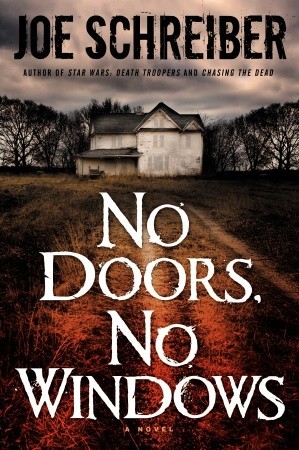
My fiction tastes are not pretentious, nor particularly limited. I read and enjoyed Mikhail Bulgakov’s The Master and Margarita, which is sufficiently “high-brow,” I think, to be classified as capital-L Literature. (The Literary-vs.-genre-fiction conversation is a huge one, and one I’m interested in, but one whose place is not this post.) After that, and most recently, I read No Doors, No Windows, by Joe Schreiber. Compare them, just judging by the covers:

No Doors, No Windows does not pitch itself as Literature. I got it from the horror section in Borders (which should give you some clue as to how far behind I am on my to-read list).

Only here’s the thing. The Master and Margarita was certainly a worthwhile read—especially for someone like me, who is a sucker for black cats causing mayhem—and it had a sense of momentum. But No Doors, No Windows had momentum, movement like I haven’t experienced in a book in a long time. It features an old, eerie house, complete with a walled-off hallway, the haunted “black wing.” Disappearances and murderers and mysterious scratching sounds—what more does a ghost story need?

No doors, no windows, no time to stop and catch your breath, no good breaking point to put it down for a bit. No temptation to nod off. I read the book in two days. I did the majority of that reading curled up under a blanket, either on the couch or in bed. Even my preternatural sleeping was powerless against its pace.

We talk about how writers ought to read extensively, but I think the “genre-shaming” that goes on in some circles can restrict those extents. After all, every genre—every writer, really—privileges some qualities while disregarding others. Without variety in reading, we miss variety in exposure, which leaves us dangerously ignorant. Why? Because every super power has is limitations. Nothing, not even my capacity for sleep, is impervious to every attack.

Reading extensively is the best way to find your own Kryptonite. And, you know, techniques you might want to steal or whatever.

Psychopathology of a Grad Student

First off, yes, it’s been over six months. I know.

I’m officially halfway through my graduate program at Ball State University. Some things I’ve done over the past year:

-Taught two sections of ENG 104, a research-based course in the first-year writing program.
-Decided teaching was absolutely not for me, because I dreaded getting up in the morning to go to campus.
-Realized that I dreaded getting up in the morning, period; days when I taught just forced me to do it anyway.
-Realized something might be wrong.

Writers are a crazy lot. It’s just something we assume, and research tends to back it up. The mania of creation, the depressive blank page, the sitting in a coffee shop wearing a too-big sweater and watching raindrops slide down the window and contemplating the human condition in all its extremes. And, you know, sometimes the hallucinations and delusions and total breaks from reality.

Similarly, we attribute an inherent neuroticism to graduate students. What sort of obsession, after all, drives somebody into that sort of self-selected servitude? Late nights hoarding books in the library, snapping, “No!” in response to every social invitation, taking naps at a desk between classes and then waking up feeling guilty for not having used that time more productively.

There’s a certain glamour in fitting these stereotypes. What’s more writerly than soul-crushing angst? As Ursula K. Le Guin observes in “The Ones Who Walk Away from Omelas”

The trouble is that we have a bad habit, encouraged by pedants and sophisticates, of considering happiness as something rather stupid. Only pain is intellectual, only evil interesting. This is the treason of the artist: a refusal to admit the banality of evil and the terrible boredom of pain. If you can’t lick ’em, join ’em. If it hurts, repeat it. But to praise despair is to condemn delight, to embrace violence is to lose hold of everything else. We have almost lost hold; we can no longer describe a happy man, nor make any celebration of joy.

And if you’re not in a codependent, self-destructive relationship with graduate school, you may as well not be in grad school at all. Clearly you aren’t taking it seriously enough.

I have a spotty history when it comes to mental health, but I like to think I’ve learned something from it. Most importantly: The time to intervene is before it becomes unbearable. You may think, But I’m still functioning. I’m still getting out of bed, after all. Thing is, you have to take action while you’re still functioning enough to get out of bed. Taking action requires getting out of bed.

Yes, there may be some link that makes writerly types more prone to the crazies, or vice versa; yes, grad school will demand time and energy and commitment. But there’s no glory in misery or self-neglect.

There’s glory in action. Or, at least, there’s the potential for it.

« Older posts Newer posts »

© 2026 Alice Thomsen

Theme by Anders NorenUp ↑